Le Corbusier: Unité d’habitation “Typ Berlin”
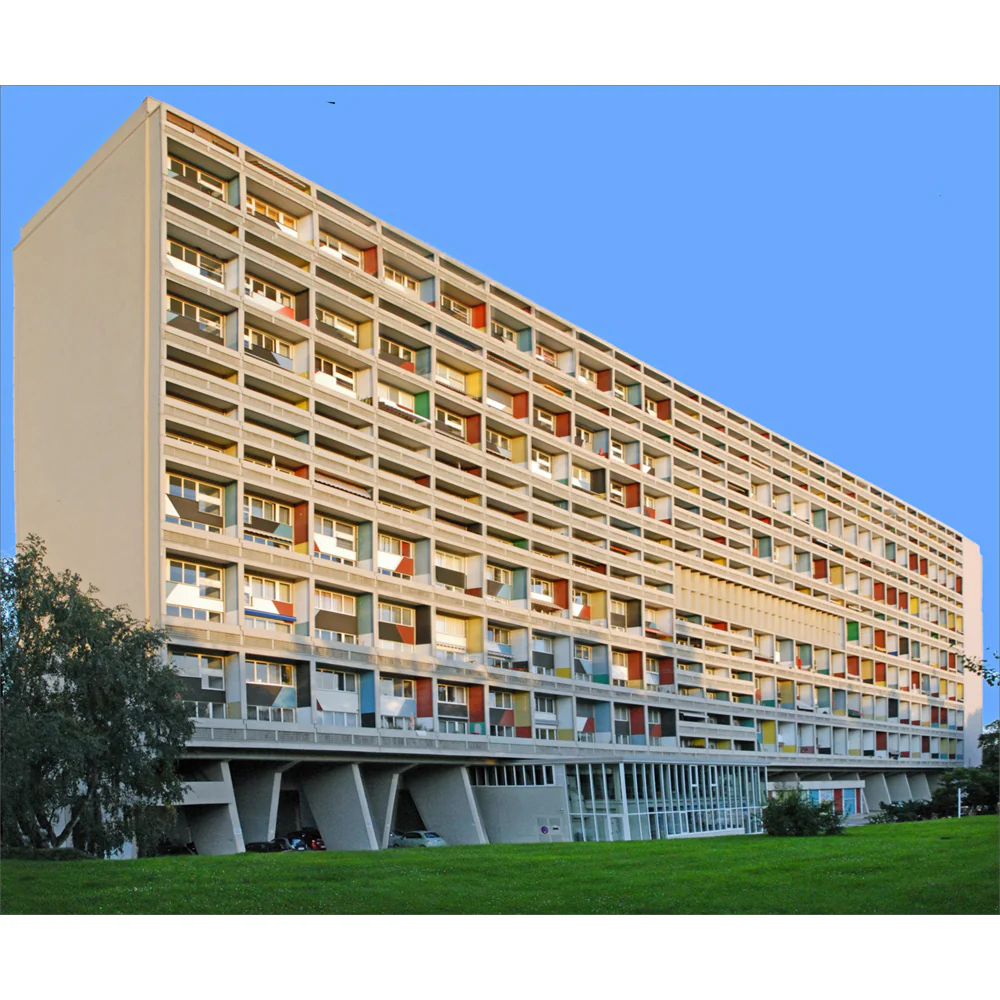
Le Corbusier’s Unité d’habitation ‘Typ Berlin’ (built 1957–58) is an exceptional testimony to Berlin’s post-war architecture.
Although it follows the basic concept of a ‘vertical village’ as envisioned by the architect, the gigantic block, containing 530 apartments, clearly differs from the Marseille original. However, as a result of modifications required by the client, the construction occupies the position of an outsider in Le Corbusier’s oeuvre.
Authors from the fields of architecture, urbanism, art history, and cultural studies precisely set out the genesis of the listed building for the first time. In addition, they investigate the development of the ‘Unité d’habitation’ model, the Berlin variant’s unique colour concept, and carry out a comparison with the four typologically related buildings in France.
In looking at the significance, ingenuity, and creative impact of Le Corbusier’s unique creation in Berlin, the so-called ‘Corbusierhaus’, the publication fills a gap in the literature on post-war modernism and the architect’s body of work.
JOVIS. pb. 256 pages. 180 colour ills. 17 x 24 cm.
Product Information
Product Information
Shipping & Returns
Shipping & Returns

Le Corbusier: Unité d’habitation “Typ Berlin”
Le Corbusier: Unité d’habitation “Typ Berlin”
Le Corbusier’s Unité d’habitation ‘Typ Berlin’ (built 1957–58) is an exceptional testimony to Berlin’s post-war architecture.
Although it follows the basic concept of a ‘vertical village’ as envisioned by the architect, the gigantic block, containing 530 apartments, clearly differs from the Marseille original. However, as a result of modifications required by the client, the construction occupies the position of an outsider in Le Corbusier’s oeuvre.
Authors from the fields of architecture, urbanism, art history, and cultural studies precisely set out the genesis of the listed building for the first time. In addition, they investigate the development of the ‘Unité d’habitation’ model, the Berlin variant’s unique colour concept, and carry out a comparison with the four typologically related buildings in France.
In looking at the significance, ingenuity, and creative impact of Le Corbusier’s unique creation in Berlin, the so-called ‘Corbusierhaus’, the publication fills a gap in the literature on post-war modernism and the architect’s body of work.
JOVIS. pb. 256 pages. 180 colour ills. 17 x 24 cm.
Product Information
Product Information
Shipping & Returns
Shipping & Returns
Description
Le Corbusier’s Unité d’habitation ‘Typ Berlin’ (built 1957–58) is an exceptional testimony to Berlin’s post-war architecture.
Although it follows the basic concept of a ‘vertical village’ as envisioned by the architect, the gigantic block, containing 530 apartments, clearly differs from the Marseille original. However, as a result of modifications required by the client, the construction occupies the position of an outsider in Le Corbusier’s oeuvre.
Authors from the fields of architecture, urbanism, art history, and cultural studies precisely set out the genesis of the listed building for the first time. In addition, they investigate the development of the ‘Unité d’habitation’ model, the Berlin variant’s unique colour concept, and carry out a comparison with the four typologically related buildings in France.
In looking at the significance, ingenuity, and creative impact of Le Corbusier’s unique creation in Berlin, the so-called ‘Corbusierhaus’, the publication fills a gap in the literature on post-war modernism and the architect’s body of work.
JOVIS. pb. 256 pages. 180 colour ills. 17 x 24 cm.